
Blackjack Through the Lens: Tips for Photographing Casino Floors and Card Tables
Casino photography presents a unique set of challenges that test even experienced photographers’ technical abilities and creative vision. The dramatic interplay of light and shadow, the fast-paced action at gaming tables, and the need to capture authentic moments without disrupting play all require specialized techniques. Whether you’re documenting the architectural grandeur of casino spaces or focusing on the intimate tension of a blackjack hand, mastering this photographic niche demands understanding both the technical requirements and the visual storytelling opportunities these environments provide.
Understanding the Casino Environment
Casinos are carefully designed sensory experiences where lighting serves both practical and psychological purposes. The deliberate use of warm, ambient illumination creates an atmosphere that keeps energy levels high while maintaining an intimate feel at individual tables. This controlled lighting environment, however, presents the photographer’s primary challenge: capturing sharp, properly exposed images in conditions that typically measure between 50-200 lux—significantly dimmer than typical indoor spaces.
According to professional interior photography resources, working in low-light conditions requires a fundamental shift in approach. The techniques developed for photographing challenging environments translate well to casino floors, where ambient light must be maximized while maintaining image quality.
Essential Equipment for Casino Photography
Success in casino photography begins with proper equipment selection. A full-frame camera body with strong high-ISO performance is invaluable, as you’ll frequently shoot at ISO 3200-6400 or higher. Modern sensors handle these sensitivity levels remarkably well, producing usable images with manageable noise levels that can be further refined in post-processing.
Fast lenses are non-negotiable. Prime lenses with maximum apertures of f/1.4 to f/1.8 allow you to work with faster shutter speeds and lower ISO settings than zoom lenses typically permit. A 35mm f/1.4 offers versatility for environmental shots capturing both tables and surrounding architecture, while a 50mm f/1.2 or 85mm f/1.8 excels at isolating subjects and creating compelling close-ups of hands, cards, and chips.
Stabilization becomes critical when shooting handheld at slower shutter speeds. Whether through in-body image stabilization, optical stabilization in lenses, or both, this technology allows you to push the boundaries of what’s possible without a tripod—essential when mobility and discretion are priorities.
Mastering Low-Light Technique
The technical triangle of aperture, shutter speed, and ISO must be carefully balanced for casino photography. Opening your aperture to its maximum allows the most light to reach the sensor while creating shallow depth of field that can beautifully isolate your subject from busy backgrounds. A player’s hands manipulating cards can stand out dramatically when the background softens into an artistic blur of colored lights and shapes.
Shutter speed selection requires considering whether you want to freeze action or introduce intentional motion blur. For crisp images of cards being dealt or chips being stacked, aim for 1/250th of a second or faster. For creative shots that convey the energy of a busy casino floor, slower speeds like 1/30th or 1/15th can blur moving elements while keeping static subjects relatively sharp—a technique that requires steady hands or brief support against a stable surface.
Working With Available Light
Casino lighting typically comes from multiple sources: overhead ambient lighting, focused spotlights on tables, decorative accent lighting, and the glow from slot machines and electronic displays. Rather than fighting this complex lighting environment, skilled photographers learn to embrace and use it creatively.
Table spotlights provide the most flattering illumination for gameplay photography. These focused light sources create natural highlights on cards, chips, and players’ hands while maintaining shadow detail that adds depth and dimension. Position yourself so that table lighting works in your favor rather than against you, and be prepared to adjust your shooting angle to avoid harsh shadows or blown highlights.
Composition Strategies for Gaming Tables
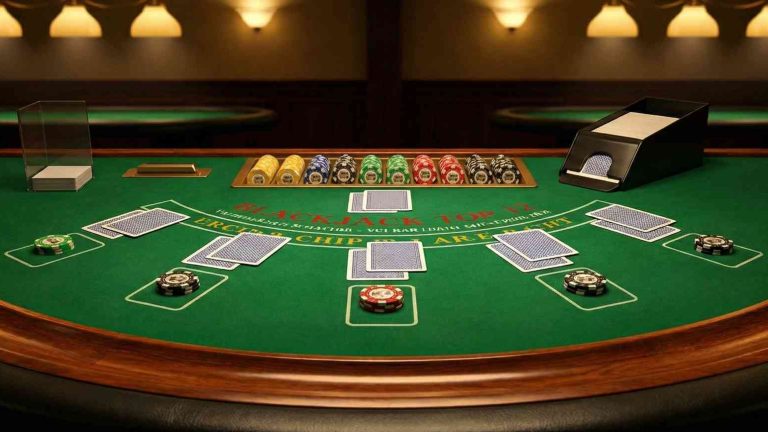
Effective blackjack table photography goes beyond technical proficiency to thoughtful composition. The geometric patterns inherent in casino design—the rectangular tables, circular chips, and linear arrangement of cards—provide natural compositional elements. The green felt creates a consistent, neutral background that makes colorful chips and cards stand out.
Consider varying your perspectives throughout a shoot. Eye-level shots from a player’s viewpoint create intimacy and immersion, putting viewers in the action. Elevated angles showcase the table layout and the spatial relationships between dealer, cards, and chips. Close-ups of hands, cards being revealed, or stacks of chips isolate specific details that tell parts of the larger story.
The principles explored in photographing challenging environments like desert landscapes apply surprisingly well to casino photography. Both require working with difficult lighting conditions, finding compelling compositions in potentially monotonous environments, and patience in waiting for the perfect moment.
Capturing Decisive Moments
Great casino photography requires anticipation. Understanding blackjack’s rhythm allows you to predict when interesting moments will occur—the reveal of hole cards, a player’s decision to hit or stand, the payout of winning hands, or reactions to significant outcomes. Position yourself to be ready when these moments arrive, with camera settings pre-adjusted for the lighting conditions.
Continuous shooting mode enables capturing sequences that might include the perfect expression, hand gesture, or action. Reviewing sequences later often reveals frames where everything aligns—focus, exposure, and moment—more reliably than attempting to capture single perfect shots.
Respecting Privacy and Casino Policies
Casino photography comes with significant restrictions. Most establishments prohibit photography on gaming floors to protect player privacy and prevent cheating documentation. When permitted to photograph—typically for promotional purposes or with explicit authorization—discretion remains essential. Many effective casino photographs focus on details rather than identifiable faces: hands dealing cards, chips being arranged, the texture of felt, the geometry of table layouts.
Wide environmental shots can establish context without requiring individual consent, though checking casino policies before shooting is always advisable. When faces do appear in shots, obtaining releases protects both photographer and subject while ensuring images can be used commercially.
Post-Processing Considerations
Raw format shooting provides maximum flexibility for correcting exposure and white balance issues that inevitably arise in mixed lighting. Casino environments frequently combine warm tungsten lighting with cooler fluorescent sources, creating color casts that require correction. Adjusting white balance selectively through local adjustments can neutralize unwanted color shifts while preserving the warm atmosphere that characterizes casino ambiance.
Noise reduction tools have advanced considerably, allowing aggressive high-ISO shooting with post-processing cleanup that maintains detail and sharpness. The techniques for managing dramatic lighting transitions discussed in sunrise and sunset photography prove invaluable when processing casino imagery.
From Physical to Digital Gaming Spaces
The visual language developed through physical casino photography informs how online gaming platforms recreate the blackjack experience digitally. Lighting, camera angles, and composition choices that work in physical spaces translate into design decisions for digital interfaces. For readers interested in exploring how online platforms recreate the visual atmosphere of the game, our guide to some of the most popular Canadian sites offering blackjack provides a deeper look at digital table experiences.
The Art of Casino Photography
Mastering casino photography requires technical skill, creative vision, and patience. The environment’s challenges—low light, privacy concerns, fast action—ultimately create opportunities for dramatic, compelling imagery. Whether capturing the intimate tension of a blackjack hand or the grand architecture of the gaming floor, photographers who embrace these challenges produce work that conveys the unique atmosphere where risk, reward, and entertainment intersect.
